A Touch of Goldmund History

The History

1978

A straight line tone arm, named the "Goldmund T3" is shown by its designers, a group of physics students, during an exhibition in Europe.

1979

The T3 tonearm is presented for the first time in the USA. The most famous American high-end audio manufacturers and reviewers are raving publicly about its sonic performance.

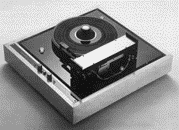
A prototype of the Studio, the first Goldmund turntable is displayed during an exhibition in Paris.

1981

The Goldmund first production company is formed in Geneva, Switzerland.

The Goldmund Studio turntable and T3 tonearm are celebrated by the leading high-end magazines around the world as the "state of the art" in audio turntables.

1982

The first five year Goldmund Strategic Plan is developed. It shows the necessity for Goldmund to enter the field of electronics and speakers, as well as the need of long term research on digital.

1983

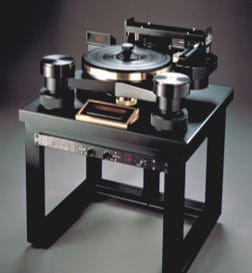
The Goldmund Reference turntable is shown at the Chicago CES. This ultimate 100kg turntable displays for the first time a perfect application of the Goldmund "Mechanical Grounding" (TM) principle.

Goldmund builds the first Dialogue speaker. A crossover based on unheard of composite slopes and complexity and an enclosure in molded metacrylate make this speaker the fastest speaker existing.

1984

The rapid growth of the company and the new products push Goldmund to group all production in its new Geneva factory, with sophisticated computer automation and management.

The beginning of a long development, the concept of the first Mimesis 2 and Mimesis 3 is presented to the press.

1985

After two years of extensive research on digital, the company finally announces that the Goldmund CD player introduction will be postponed by several years. The sound quality of digital is not yet considered as sufficient for the level of Goldmund standards.

Message of the research team indicates that the first digital Goldmund product should not come on the market before 1990.

1986

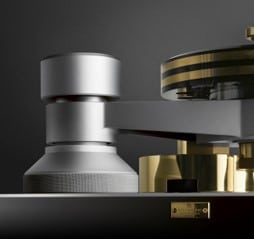
The Goldmund T3F tone arm replaces the famous T3, using a computer controlled automatic servo-drive. Goldmund announces officially that the T3F is the last development made by the company in analogue record players and that all research forces will concentrate on digital.

1987

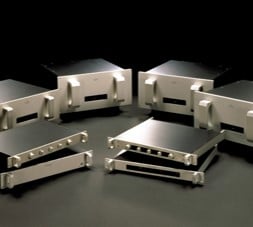
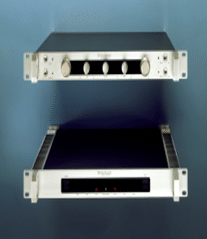
The first Goldmund electronics, the MIMESIS 2 Preamplifier and MIMESIS 3 Amplifier are released.

They use an ultra-fast circuit topology allowing remarkable transparency and dynamics.

1988

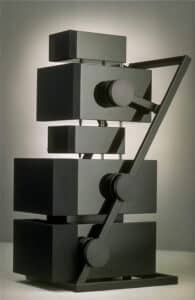
Goldmund debuts the Apologue, a no-compromise loudspeaker of highest price, designed by the contemporary Italian designer, Claudio Rotta-Loria.

Almost 2 years of production are immediately sold at its introduction during the June 88 CES in Chicago.

The Mimesis 7 Preamplifier and the Mimesis 6 Amplifier are released, bringing Mimesis technology to a less expensive price range.

1989

Claudio Rotta-Loria is invited to present the Apologue in the design collection at the Museum of Modern Art in New York.

The Analogue, the second speaker system of highest level made by Goldmund, is presented in June.

The Mimesis 9 becomes the first Goldmund high-powered amplifier. For the first time in hi-fi amplifiers history, it uses the Goldmund "Mechanical Grounding" construction.

The Mimesis 4 High Musicality Tuner is released to match the Mimesis family.

1990

On the first of January, Goldmund officially announces the beginning of the "Goldmund Digital Decade" and new products, based on new revolutionary concepts, including the MIMESIS 10 outboard D/A converter. All future products will integrate the unavoidable mix between computer, video and audio domains.

1991

Goldmund announces the Mimesis 10P, a digital preamplifier version of the Mimesis 10 D/A converter. Fully remote-controlled, the unit uses 2 automatically calibrated potentiometers.

Goldmund introduces new version of its power amplifier line : the Mimesis 9.2 and 8.2 respectively 350 and 150 W mono versions. The Mimesis 9.2 immediately receives the "Product of the Year" award in Japan.

The Goldmund Lineal cable, initially developed as a digital link, uses for the first time the "Goldmund room-temperature chemical bonding" a revolutionary technology preventing any molecular modification in metal during soldering.

1992

The Mimesis 10P digital preamplifier and the Mimesis 8.2 mono amplifier both receive the "Component Of The Year" award in Japan.

First introduction of the Mimesis 12 D/A converter, a simpler application of the conversion technology used in the Mimesis 10.

First announcement of future Audio-Video line of Home-Theater Goldmund products with deep computer software implication to optimize upgradability.

1993

The first audio-only CD turntable, the Mimesis 36 is presented in avant-premiere during the Tokyo High end show. It displays a fully original way of using the Goldmund "Mechanical Grounding" principle in a CD turntable. It receives the "Product of the Year" award in Japan.

1994

The Mimesis 9.4 introduces for the first time the new Goldmund A2 module, based on the company's research on better transistors, resistors and capacitors thermal behavior when used with transient signals.

Goldmund officially announces its interest in developing Multimedia products : audio software, small speakers, amplifiers of highest quality.

1995

Introduction of the new "Entry Line" of Goldmund more affordable products : The Mimesis 14 D/A converter, the Mimesis 39 CD turntable and the Mimesis SR (for square root) integrated amplifier.

Goldmund presents the new Goldmund Speaker Cable, as well as the Lineal Interconnect, both derived of the research made on the Lineal Digital Cable.

Goldmund introduces the "Thermal Grounding" principle in its amplifiers, a new principle which should revolutionize the analog amplification domain.

Goldmund create a link with Job for its multimedia first developments.

Goldmund announces the Mimesis 20, Mimesis 22 and Mimesis 24 a very sophisticated set of 3 products to control a full Home-Theater system. The large implication of computers include connection to a laptop for tele-maintenance, self diagnosis program and the possibility for each Goldmund dealer to configure the customer's applications on the spot

1996

Goldmund signs an agreement with Job for mutual development cooperation on multimedia new products. The first Job circuit is used by the company in the Mimesis SRA power amplifier.

The Mimesis 20 and Mimesis 22 are presented in Vegas.

The Mimesis 20 receives the Japanese "Component of the Year" award.

Finally Digital AudioTrading which owns the Goldmund brand acquires the Job company after one year of negotiation.

1997

Goldmund introduces the Epilogue 1 Satellite System and the Epilogue 2 Bass Extension Speaker, first elements of the Epilogue Full Speaker System, aimed to the absolute top Home Theater Installations.

Goldmund pre-announces new developments for the future PC-Theater ultimate systems, including computer programs to manage the signal processing.

The Mimesis 28, new stereo amplifier receives the Japanese "Component of the Year" award.

Goldmund signs an agreement with Sylans Computers in California to develop the future needed computers.

1998

Goldmund introduces the SRDA et SRTT in Vegas, new Entry line D/A converter and CD transport.

Goldmund replaces the Mimesis 8.4 by the Mimesis 28.4, based on the Mimesis 28 and using the JOB circuit.

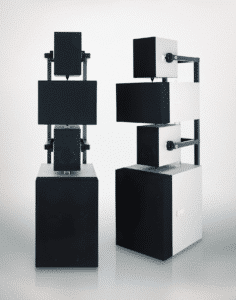
Goldmund shows finally in September 1998 the finished full Epilogue speaker by delivering the Epilogue 3 active subwoofer playing only below 35Hz.

The Mimesis 27 remote-control preamplifier replaces the Mimesis 7.5 and Mimesis 2+ as the High-end line analogue preamplifier.

The Goldmund SRI2 replaces the SR original integrated amplifier with higher power and the JOB power amp circuitry. The SRI2 is also using the new remote-control circuit developed for the Mimesis 27.

The Goldmund SRM2 replaces the SRM with much higher transient power and even better sound.

The Goldmund SRP2 replaces the Goldmund SRP with built-in volume remote control as in the SRI2.

The Goldmund Full Epilogue system and the Mimesis 29.4 both received the "Component of the Year Award" in Japan.

1999

Goldmund presents the Theater3 concept derived from the full Epilogue Speaker design which allows a Home-Theater setup to be much more accurate in time response. Goldmund announces the Trilogue speaker applying the principle at a reasonable price.

Goldmund introduces the Chiasma, its first product aimed to Home-Theater control totally based on PC computer hardware.

Goldmund announces the Alize2 D/A technology with "tube-like" audio quality.

Goldmund introduces the Mimesis 21 based on the new Alize2 technology and which is aimed to replace the Mimesis 10 and 12.

2000

Goldmund introduces the Trilogue Subwoofer with the circuit already designed for the Epilogue 3. Matching the Trilogue and also designed to complement a pair of stand-alone Epilogue 1, the Trilogue Subwoofer is designed as the Epilogue 3 as a "linear" subwoofer, with perfect musical integration, rather than an "Effect" Subwoofer especially designed for Home-Theater.

Goldmund announces the Millennium Amplifier, based on the latest evolution of the JOB circuit, using a new generation of hyper-selected handmade components and driven by a full Pentium embedded computer with Internet link. Based on a purchase by subscription, the first Millennium is delivered on Dec 31st to celebrate the new Millennium for the company. A limited series of 100 pieces only will be produced.

Goldmund also introduces its first DVD player the Easy DVD where a revolutionary power supply provides exceptional sound and image quality at a reasonable price.

2001

Goldmund shows the Eidos 38, its first high-end DVD/CD transport which replaces the Mimesis 36 and 39. The Mechanical Grounding construction and a new "Magnetic Damper" technology provide much higher quality CD playback than usual DVD players making the Eidos the universal player for a High-End Home-Theater system.

Goldmund introduces the Millennium Version of its High power amplifiers with a new front circuit allowing better protection and auto-start functions. The sound quality is much improved with the JOB3 circuit.

Goldmund introduces its new Mimesis 22 Analogue preamplifier and Mimesis 20 Digital Preamplifier in the Millennium version with improved sound and features.

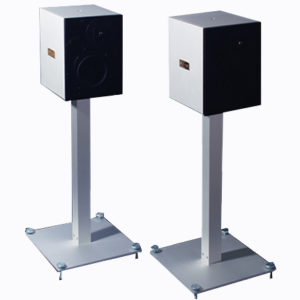
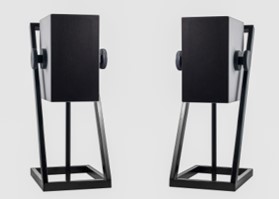
The Logos speaker, using the TH3 principle in a small metal enclosure is introduced with floor standing and wall mounting supports for small Home Theater systems.

2002

Goldmund introduces at the January CES the Chiasma Music Server software with Wireless multi-room music distribution of highest Goldmund sound quality, a premiere in the whole industry.

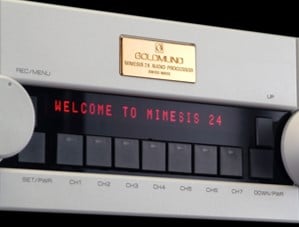
Goldmund presents the Mimesis 24, its first ultimate line Multichannel processor with a record-breaking 32 output channels configurable by Internet.

Goldmund offers the Job4 circuit upgrade for free to the owner of the Millennium amplifier, again improving its sound quality and then extends it to its whole line of power amplifiers

The Logos active speaker is presented with analogue and digital input.

The Logos family speaker is extended with two new models, the Logos Mini available in passive and active version and the Logos Sub, providing analogue and digital input.

The Eidos 38D, first DVD player ever released with a Digital Video DVI output is introduced. It is immediately accepted as the best machine ever, also in RGB progressive output. It is also recognized as the best sounding CD transport ever made, supplanting the Mimesis 36.

2003

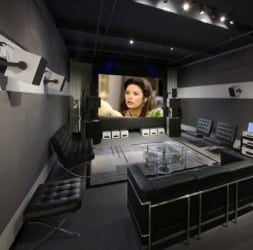
Goldmund demonstrates at the January CES a complete Home-Theater system of middle range using 2 Logos Active, 2 Logos mini active and one Logos Sub, all driven in digital by a Mimesis 24, with a fully digital Video solution including a plasma prototype, an Eidos 38D and its long DVI new digital cable.

Goldmund shows also a full Audio wireless distribution system from its Home Networking family of products with the final version of the Chiasma 1 and a Chiasma 11 receiver. The company also announces the first demonstration of Wireless Video networking in the Los Angeles Demo House.

Goldmund introduces its first multi-format DVD playing all kind of formats, the Eidos 18D, using the same progressive and digital Video output circuit as the Eidos 38D.

English   Chinese